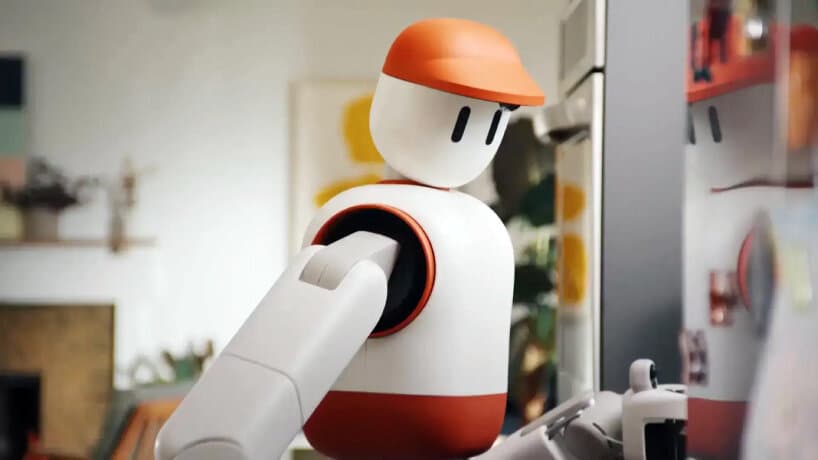
In January 2023, we published our first Master Plan. It outlined why Avala exists: to build AI infrastructure that distributes abundance globally, treating the humans who train AI as partners rather than disposable inputs. Every word of it still stands.
Back then, we called it "real-world AI," the idea that intelligence must be grounded in the physical world to matter. The industry now calls it Physical AI. This is Part 2: how we are building it. The short version: compute is solved, hardware is scaling, algorithms are converging, and the entire field is about to hit a wall of missing ground truth that simulation cannot fill. A highly trained human workforce is not just an ethical imperative. It is the only mathematical path through that wall.
Building global abundance is not merely a policy problem. It is a physics problem.
The Terafab and the missing layer
Last month, Elon Musk unveiled the Terafab at Austin's Seaholm Historic Power Plant: a joint Tesla-SpaceX-xAI semiconductor fabrication facility spanning an estimated 100 million square feet, producing more than one terawatt of AI compute per year on 2-nanometer process technology, at a cost somewhere between $20–25 billion (Musk's figure) and $35–45 billion (Morgan Stanley's). He framed it explicitly as a step toward a Type II Kardashev civilization: solar-powered AI satellites, one to ten billion humanoid robots per year, and an economy so autonomous that "if you can think of it, you can have it."
The hardware targets are staggering. So is the skepticism: one semiconductor analyst gave the Terafab an 80% chance of never being built. But whether Musk hits his timeline is the wrong question. The right question is what happens when Physical AI reaches scale, regardless of who builds the chips.
Here is what I know from building Tesla Autopilot and watching the data flywheel firsthand: compute is no longer the bottleneck. Hardware is scaling. Foundation models are converging. What the industry is grossly underestimating is the entropy of the real world. You cannot run a K2 civilization on a hallucinated physics engine. These systems are about to starve for ground truth.
The sim-to-real delusion
Silicon Valley has settled on a consensus: simulation will solve Physical AI. Spin up a million headless instances of NVIDIA Isaac Sim or MuJoCo, generate synthetic data, run reinforcement learning, and zero-shot transfer the policies to physical hardware.
This works beautifully for rigid-body kinematics and bipedal locomotion, where gravity is mathematically predictable and the state space is well-bounded. NVIDIA demonstrated it with GR00T N1: 780,000 synthetic trajectories generated in 11 hours, equivalent to nine months of human demonstrations, and a synthetic-plus-real mix that improved locomotion performance by 40%.
But sim-to-real catastrophically fails at the "last inch" of dexterous manipulation. When a robot routes a flexible wire harness, handles a wet vegetable, or folds a crumpled shirt, the simulator's physics engine diverges from reality. Soft-body deformation, friction, tactile forces, and stiction at the boundary of contact are so sensitive to initial conditions that no simulator can faithfully reproduce them. They must be learned from the real world.
The exchange rate tells the story. Recent work from UC Berkeley and Stanford quantified it: roughly 8 simulation samples provide the equivalent learning signal of 1 real teleoperated demonstration for manipulation tasks. Worse, human video data can degrade performance, with approximately 10 human video demonstrations negating the benefit of 1 teleoperation data point. And Ai2's MolmoBot, the strongest sim-to-real result in manipulation to date (March 2026), still required simulation environments carefully calibrated against real-world physics to achieve zero-shot transfer for specific industrial tasks.
Train a policy entirely on synthetic data and you inject "sim-bias." In constrained factory cells with known objects, sim-bias is manageable. In the unconstrained physical world, it means shattered glass, snapped actuators, and catastrophic failure. To build robust control policies with modern architectures, Flow-Matching Diffusion, Action Chunking Transformers (ACT), or Vision-Language-Action models (VLAs), you must ground them in massive, high-fidelity, multimodal, human-corrected demonstrations collected in the chaos of reality.
The path to global abundance does not run through simulation alone. It runs through the unconstrained physical world.
The data gap is structural, not temporary
The largest open robotics dataset in the world, Google DeepMind's Open X-Embodiment, contains just over one million robot trajectories from 22 robot embodiments, spanning 527 manipulation skills across 160,266 task instances: roughly 2,000 hours of robot interaction data. Add every other major public dataset, DROID (76,000 demonstrations, 350 hours), BridgeData V2 (60,096 trajectories), and RH20T (110,000+ sequences), and all known public robotics datasets total roughly 5,000 to 10,000 hours of interaction data.
Frontier language models train on 15 to 18 trillion tokens spanning virtually all digitized human knowledge.
In raw token-equivalent terms, the gap is roughly one order of magnitude. But the meaningful gap is in diversity and coverage. OXE covers 527 skills across approximately 300 scenes; internet text spans the full breadth of human language, knowledge, and reasoning. Measured by diversity, the gap is 3 to 6 orders of magnitude. UC Berkeley's Ken Goldberg quantified it at GTC 2025 as up to 120,000x between existing robot foundation models and mature LLMs. The NVIDIA GR00T N1 whitepaper described the situation as "an archipelago of data islands rather than a coherent, Internet-scale dataset."
The gap is structural. Language is a discrete, low-dimensional abstraction; you can train an LLM on the internet because text natively represents text. Physical interaction data is continuous and high-dimensional: joint torques at 1000Hz, camera feeds at 60Hz, event cameras, and tactile sensor arrays, all in tight synchronization. Every environment is unique. Every object has different friction, compliance, and weight distribution. There is no "internet of physical interactions" to scrape.
You cannot build a billion-robot economy on sub-scale datasets collected by graduate students in pristine academic labs. You cannot achieve "if you can think of it, you can have it" when your VLA has never encountered the edge cases of complex friction, optical occlusion, deformable materials, and unregulated lighting that define the real world.
The bottleneck is not the algorithms. OpenVLA achieves 97.1% success on LIBERO after the OFT upgrade. GR00T N1 operates at 120 Hz with a dual-system architecture. We know how to build capable policies.
The bottleneck is not compute. The Terafab, and the $200+ billion flowing into GPU clusters annually, will solve that.
The bottleneck is the ground truth engine: high-entropy, temporally synchronized, causally annotated 4D data from the physical world. Useful experience already exists, in public datasets and in every fleet's own logs, but it is incomplete, unevenly covered, and mostly disconnected from the decision a particular model needs. The experience that matters most is still produced one deployment at a time, by the companies that own the machines.
This is the exact problem Avala was built to solve.
We don't "label." We engineer ground truth.
Avala is Fleet Learning Infrastructure for Physical AI: the closed loop that turns a fleet's own experience into its owner's next release. Bring your fleet data; we reconstruct it, curate it, label it with expert verification, and hand back versioned, rights-cleared releases that your VLA, driving, and robotics models train on. The customer owns the model. We own the infrastructure that makes it improve.
We do not draw bounding boxes. Bounding boxes are perceptual artifacts for a 2D era. Robots need actionable affordances.
We ingest multi-rate sensor streams from robots, autonomous vehicles, drones, and industrial IoT. We fuse these streams, including 3D LiDAR, stereoscopic cameras, radar, 6-DoF force/torque tensors, and proprioception, into temporally aligned, spatially coherent dynamic scene graphs. We annotate with the rigor imitation learning requires: trajectory smoothing, contact-phase segmentation, kinematic retargeting, and causal-confusion resolution.
We do this at scale. Our trained annotator roster spans five continents, organized around domain-specific robotic ontologies and quality assurance built for safety-critical systems. We process millions of multi-modal frames per day for production customers in autonomous vehicles, delivery robots, and agricultural automation, producing over a billion point-level labels per day across semantic segmentation, point clouds, and 4D scene annotation.
And we do it with deterministic traceability. Every action prediction from a downstream VLA can be traced back to the human-validated ground truth that influenced it. When a robot does something unexpected in the field, our "glass-box" infrastructure surgically isolates the out-of-distribution (OOD) data gap and patches it.
Why legacy 2D infrastructure breaks
There are other data companies. Their architectures were not built for the physics of the real world.
The largest 2D annotation platforms were built for the CNN and Transformer computer vision eras. Some are valued in the tens of billions, but their core architectures remain 2D-first, and recent consolidation in the space, including major acquisitions, customer flight, and workforce reductions, has only accelerated the divergence between what these platforms can do and what Physical AI requires. None of them natively parse non-Euclidean spatial transformations, continuous high-frequency control loops, MCAP files, or ROS 2 bags. They can label what a robot sees; they are architecturally incapable of mapping what a robot should do.
Robotics observability tools have built powerful visualization SDKs and open formats. We ship native MCAP support and stand on those open standards. But visualization is one capability inside the data infrastructure stack; the rest (ingest, sensor fusion, 4D Gaussian reconstruction, auto-labeling with specialist models, human verification, dataset versioning, evaluation on the customer's own test set, and edge-case harvest) has been left to in-house teams to assemble from scratch, while training and deployment stay with the customer. Tesla solved the whole stack inside Tesla. Avala solves it externally, for everyone else. The loop is the whole pie. Visualization is one slice. Point cloud specialists offer 3D capabilities but lack robotics-specific data collection, multi-sensor fusion, and the operational workforce to annotate at production scale.
Here is the structural problem with retrofitting 2D tools: use a 2D perception tool to label imitation learning data and you introduce temporal jitter into your model. In a visual classifier, jitter is mild noise. In a robot arm running a control policy at 50 Hz, jitter corrupts the action sequence and the arm fails.
The gap is not incremental. It is categorical. The difference between labeling images for classification and labeling manipulation trajectories for imitation learning is the difference between transcribing speech and choreographing a dance. We built Avala from first principles for continuous action spaces in 4D. This is why we win production contracts against companies with 100x our headcount. They were built for a different era. We were built for this one.
Humans as the ultimate causal oracles
The tech industry's most persistent fallacy is that humans are a temporary input, an inefficiency to be automated away as soon as possible. We believe the exact opposite. In Physical AI, human intent is the precise latent variable we are trying to distill. Humans are not the bottleneck. They are the breakthrough.
RLHF (reinforcement learning from human feedback) for LLMs was rating text on a screen. RLHF for Physical AI is teleoperation, kinesthetic teaching, and corrective feedback in joint space. Humans possess an innate, intuitive physics engine honed by 300 million years of vertebrate evolution: a native understanding of weight distribution, material elasticity, and cause-and-effect that no simulation can replicate.
When a base policy encounters an out-of-distribution state, an unrecognized texture, a dropped object, a complex glare, it hesitates. You cannot script the cognitive priors required to recover. You need humans with spatial judgment to provide the exact counterfactual trajectory needed to succeed. This is DAgger (Dataset Aggregation) at planetary scale.
We have 15,000 of them. In San Francisco, Nairobi, Manila, Dhaka, Cairo, São Paulo. They are not crowdsourced gig workers mindlessly clicking polygons. They are trained operators who understand vehicle dynamics, kinematic constraints, sensor drift, and failure modes.
This is People-First AI. Not a corporate social responsibility slogan; a hardcore operational necessity. We pay above-market wages. We provide deep technical training. High-context, respected workers produce zero-defect data: the economics of high-fidelity data and the ethics of human dignity are perfectly aligned. In Part 1, we argued this was the right thing to do. In Part 2, we are proving it is the only thing that works.
The real-to-real data flywheel
When Physical AI reaches scale, the battle is no longer about baseline capabilities. It is entirely about edge cases.
A robot deploys. It encounters an unmapped artifact. The diffusion policy fails. A human teleoperator intervenes. That high-entropy out-of-distribution intervention flows back into the Avala loop within hours, is precisely aligned, annotated, and released into the customer's next training run. The loop runs on a known cadence: daily fleet ingest, weekly release cycles, and validation on the real fleet within days of each retrain. The policy updates. The robot deploys again, slightly smarter.
This closed-loop flywheel is the exact dynamic that made Tesla Autopilot one of the most advanced driving systems in the world: not algorithmic innovation alone, but billions of miles of edge-case data continuously improving the models. Tesla has invested over $10 billion in video storage, data pipelines, and training compute for FSD. Waymo has spent an estimated $1.5 billion per year on its autonomous driving program. Data infrastructure at this scale is not a nice-to-have. It is the competitive moat.
Meanwhile, everything upstream of data is commoditizing. Model companies are multiplying at staggering valuations: Figure AI reached $39 billion; Skild AI hit $14 billion after raising $1.4 billion in January 2026. Hardware is racing down the cost curve: Unitree is shipping the R1 humanoid at $4,900. Algorithms are converging: OpenVLA, GR00T N1, Gemini Robotics and other leading robot foundation models are all reaching similar capability thresholds through different architectures.
High-fidelity data infrastructure compounds forever.
But not every failure calls for more data. A machine can fail because it has not encountered a situation, because its supervision is inconsistent, or because the problem lies somewhere other than its training data. The next dataset should answer a question, and sometimes the honest answer is to repair a calibration, change an ambiguous annotation policy, or rebalance the data a team already has. A credible data partner should sometimes tell a customer not to buy more data.
The unit of progress is therefore not a dataset but a verified capability: the thing the machine must do, the situations that exercise it, the evidence it was trained on, the standard it was scored against, and the result, kept together so the same capability can be tested again against the next release or the next model.
Two systems improve in that loop. The customer's model gets a clearer path from an observed failure to a tested improvement. Avala's data-development system gets more capable with every program: a production error we observe or a disagreement between experts we adjudicate becomes a better check, a clearer instruction, or a better tool, validated on held-out evidence before it reaches the next release. Method crosses between customers. A customer's recordings, labels, evaluation results, and models never do.
At current pricing, Physical AI training data is worth roughly $0.10 to $1.00 per mapped interaction, with 3D/4D annotation costing 3 to 19 times more than 2D depending on complexity. A single robot operating for one day generates millions of frames. A fleet of a million robots will generate more required alignment data in 24 hours than all historical open-source robotics datasets combined.
That is why the market for Physical AI training data is not a subset of the robotics market but a multiplier on it. Goldman Sachs projects a $38 billion humanoid robot market by 2035 (revised 6x upward from $6 billion). Morgan Stanley projects $5 trillion by 2050. Citi projects $7 trillion. ARK Invest projects $24 to $26 trillion. Every one of those dollars creates demand for data infrastructure.
We are scaling aggressively into the humanoid, manipulation, and autonomous mobile robot verticals where the market is forming fastest.
What we're building next
The 4D world-data flywheel is the baseline. Here is the technical frontier we are building, stated as ambition, with every result to be established on a customer's own evaluation:
Agentic auto-labeling via VLMs. We are integrating Vision-Language-Action models directly into our ingestion pipeline. AI agents pre-compute routine kinematics and action chunks; our human Oracles orchestrate only the complex contact-dynamics edge cases. This division of labor scales throughput 10x without 10x headcount.
The 4D engine (dynamic Gaussian splatting). The real-to-sim-to-real path: capture real teleoperated rollouts → reconstruct scenes as 3D Gaussian splats with full camera intrinsics + extrinsics → render novel viewpoints at will → the customer trains policies on synthetic variations → validate on the real fleet. The approach is grounded in published research: SplatSim (ICRA 2025, CMU) rendered simulator trajectories through Gaussian Splat scenes for zero-shot sim-to-real transfer, ManiGaussian (ECCV 2024) built dynamic Gaussian world models that predict future scene states, and Physically Embodied Gaussians (Abou-Chakra et al., CoRL 2024) synchronized digital twins at 30 Hz from as few as three cameras. Record an environment once; synthesize new views on demand; a policy can learn from visual variations without losing the ground truth of the original physical contact. The open format for these scenes is 4dgs.dev, Apache 2.0.
Active curation by latent embedding. Not all data is useful. We analyze the distribution of a customer's training data, identify where the model is least confident, and trigger targeted collection exactly where the policy is weakest. This is how you build datasets that generalize rather than datasets that merely pass benchmarks. Whether the model improved is a separate question from whether the data met its specification, and each needs its own evidence.
Fleet-scale edge distillation. Native integration with Hugging Face LeRobot (which added native support for leading VLA policies such as GR00T N1.5 in v0.4.0), OpenVLA, and ROS 2 middleware for dynamic on-robot data filtering, compression, and automated high-entropy OOD trigger uploads. The open-source robotics ML stack is maturing fast: LeRobot's community created nearly 3,000 new datasets in October 2025 alone. We are building to be the data backbone for this ecosystem.
Open by default
A robotics team should not get locked into a proprietary data format any more than a proprietary file system. So we ship on open formats: the 4dgs format for 4D scenes (Apache 2.0), MIT-licensed SDKs and an MCP server, and native MCAP and LeRobot dataset support. Every release carries a per-frame 4D label schema with nanosecond timestamp precision, ISO 8855-compliant ego-vehicle coordinate frames, and unified intrinsics and extrinsics for cameras (PINHOLE / BROWN_CONRADY / KANNALA_BRANDT / DOUBLE_SPHERE) and LiDAR, with reference converters from ROS 2 / MCAP, Hugging Face LeRobotDataset, and Open X-Embodiment in the box.
We compete on the workflow that runs on top of the standard, not on owning the standard.
Why now: three forces converging on data
The timing is not accidental.
First, VLA models crossed a capability threshold in 2024–2025. OpenVLA, NVIDIA's GR00T N1, Google's Gemini Robotics: suddenly the models are good enough that deployment is limited by data, not architecture. Every frontier team has independently concluded that data is the binding constraint. Skild AI's CEO Deepak Pathak called most VLAs "Potemkin villages" that "lack true physical common sense." The models work. The data does not exist at scale.
Second, humanoid hardware is approaching production. Tesla began Optimus Gen 3 pilot production at Fremont in early 2026, in space vacated by the discontinued Model S and Model X, targeting mass production by H2 2026 and a million-unit annual line by end of decade. Figure AI plans 100,000 robots over four years from its BotQ facility. Unitree shipped approximately 5,500 humanoids in 2025 and targets 10,000 to 20,000 in 2026. Agility Robotics hit 100,000+ totes moved at GXO Logistics and secured a Toyota deployment. Nearly 16,000 humanoid robots were installed globally in 2025, roughly 80% of them in China. The hardware is real. It needs data.
Third, regulation is mandating exactly the data governance we provide. The EU AI Act's high-risk obligations take effect in August 2026 for standalone systems and August 2027 for product-embedded AI (with the Digital Omnibus potentially delaying these to December 2027 and August 2028). The new EU Machinery Regulation applies January 20, 2027. Together they require training data for high-risk AI to be "relevant, sufficiently representative, free of errors, and complete," with full traceability, data governance documentation, and safety verification. Penalties reach up to 35 million euros or 7% of global turnover. The companies that build data infrastructure for compliance will hold a structural advantage. The rest will scramble.
The abundance we're building toward
The civilization Musk describes requires machines that can execute physical work at staggering scale. But true abundance cannot be geographically isolated.
The current tech economy hyper-concentrates wealth in a handful of data centers and zip codes. Physical AI breaks this paradigm, because the physical world is everywhere. A logistics specialist in Nairobi who understands dynamic, chaotic traffic patterns contributes a causal prior to autonomous navigation that a theoretical engineer in Silicon Valley cannot replicate from a desk. A manipulation expert in Manila who has spent thousands of hours developing intuition for dexterous contact dynamics provides ground truth that no simulation can generate.
This is the deeper proof of Part 1's thesis. The humans who train AI systems are creating genuine, irreplaceable value, and they deserve to capture a share of it. As the Physical AI economy expands, our 15,000 coworkers become 150,000, and then 1.5 million. We are integrating human judgment from every corner of the globe into the systems that will build the future.
A civilization of abundance is only worth building if everyone gets to live in it.
Join us
The path to global abundance runs through Physical AI. The path to Physical AI runs through continuous, grounded, multimodal data. The path to that data runs through Avala.
We are engineering the flywheel that opens the age of abundance. One trajectory at a time. One frame at a time. One coworker at a time.
This is the work. This is the mission. This is the plan.